Japanese
English
- 有料閲覧
- Abstract 文献概要
- 1ページ目 Look Inside
- 参考文献 Reference
はじめに
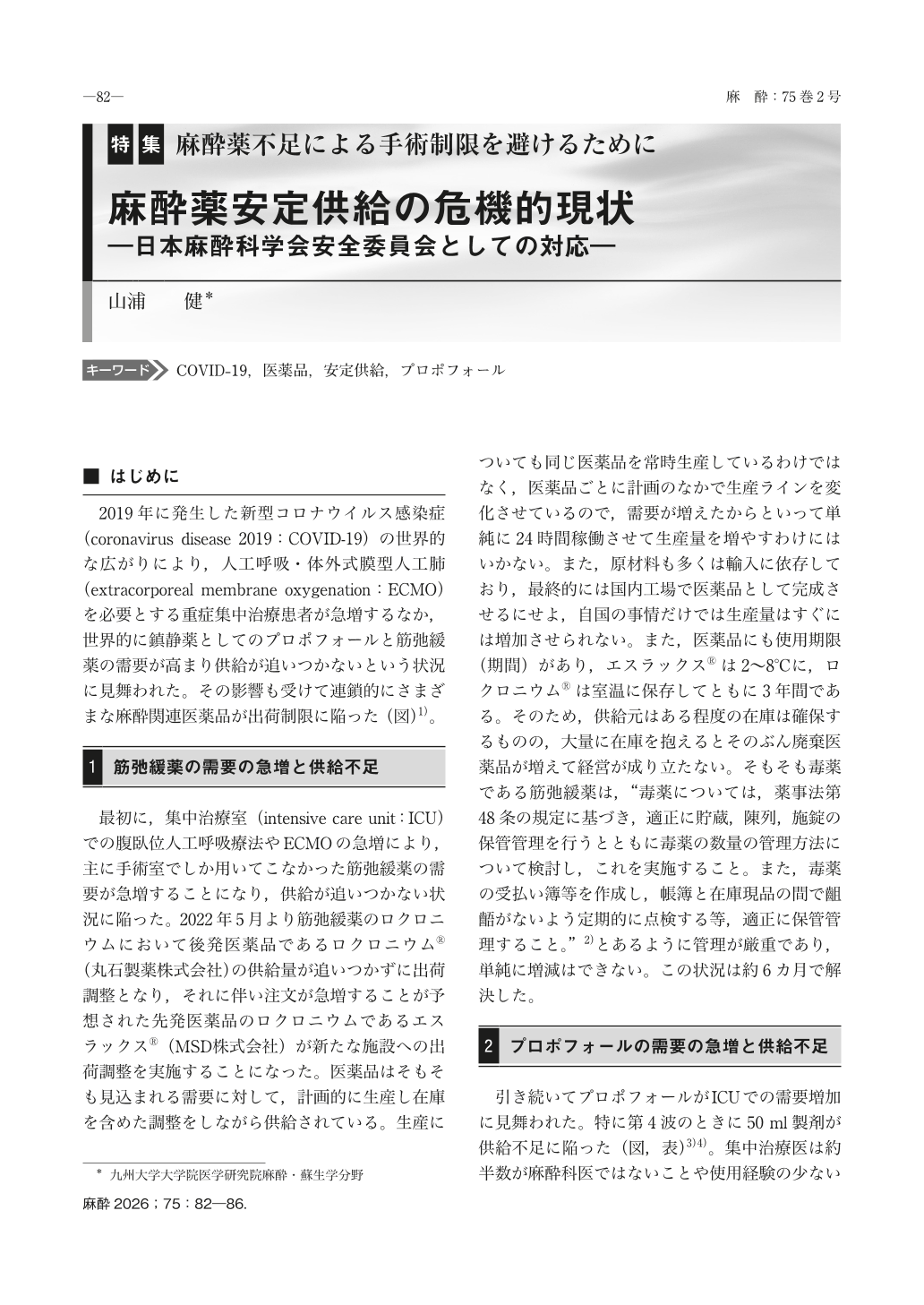
2019年に発生した新型コロナウイルス感染症(coronavirus disease 2019:COVID-19)の世界的な広がりにより,人工呼吸・体外式膜型人工肺(extracorporeal membrane oxygenation:ECMO)を必要とする重症集中治療患者が急増するなか,世界的に鎮静薬としてのプロポフォールと筋弛緩薬の需要が高まり供給が追いつかないという状況に見舞われた。その影響も受けて連鎖的にさまざまな麻酔関連医薬品が出荷制限に陥った(図)1)。
The global spread of COVID-19 caused a surge in the demand for propofol and muscle relaxants, leading to severe supply shortages and triggering a chain reaction of instability in the supply of various pharmaceuticals.
Approximately half of the intensive care physicians in Japan are not anesthesiologists, and as part of the efforts to prevent accidents based on limited experience with sedatives and muscle relaxants, the Japanese Society of Anesthesiologists(JSA)established basic guidelines prioritizing the use of propofol in intensive care units to ensure safe medical care. The JSA has also issued several proposals including changes in anesthetic techniques, and it has widely shared these proposals with anesthesiologists.
The JSA has also(ⅰ)identified medications that should be prioritized for a stable supply,(ⅱ)provided descriptions of alternative medications/therapies, and(ⅲ)published a priority order in the event of supply disruptions.
Disruptions in the supply of anesthetic drugs have occurred at some hospitals in Japan due to excessive stockpiling of medications, and in response to these disruptions the JSA has provided guidance to its members and urged self-restraint. Nevertheless, disruptions of the supplies of various medications continue to occur.
To ensure a stable supply of pharmaceuticals(including anesthetics), it is essential that pharmaceutical companies and the JSA share information and respond swiftly to supply imbalances while collaborating with the government and academic institutions.
Copyright © 2026 KOKUSEIDO CO., LTD. All Rights Reserved.