Japanese
English
- 有料閲覧
- Abstract 文献概要
- 1ページ目 Look Inside
- 参考文献 Reference
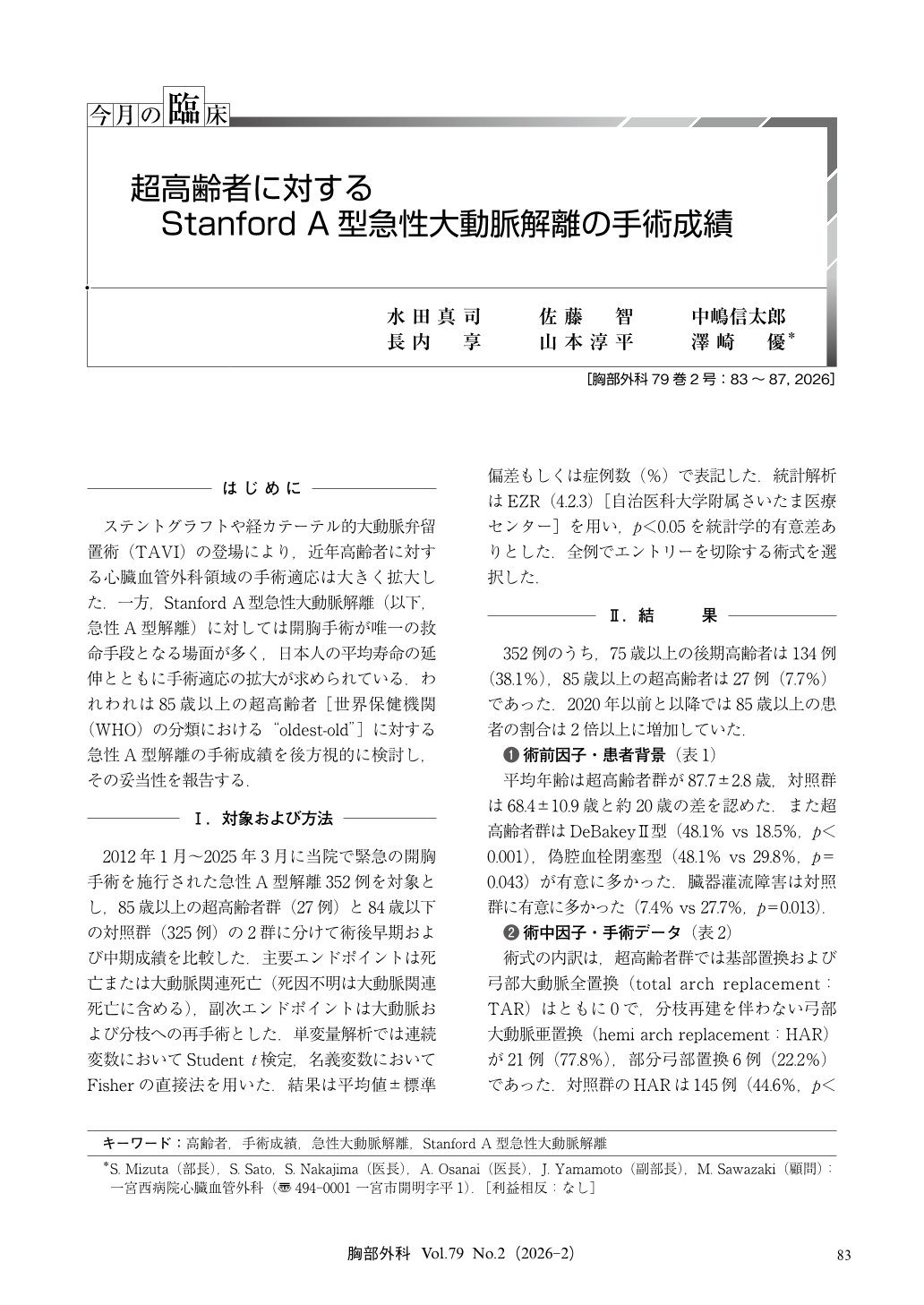
ステントグラフトや経カテーテル的大動脈弁留置術(TAVI)の登場により,近年高齢者に対する心臓血管外科領域の手術適応は大きく拡大した.一方,Stanford A型急性大動脈解離(以下,急性A型解離)に対しては開胸手術が唯一の救命手段となる場面が多く,日本人の平均寿命の延伸とともに手術適応の拡大が求められている.われわれは85歳以上の超高齢者[世界保健機関(WHO)の分類における“oldest-old”]に対する急性A型解離の手術成績を後方視的に検討し,その妥当性を報告する.
This retrospective analysis assessed surgical outcomes in patients aged 85 years or older who underwent emergency open thoracic aortic surgery for acute Stanford type A dissection between 2012 and 2025. Among 352 patients, 27 were classified as very elderly. Compared to younger cohorts, this group exhibited a higher prevalence of DeBakey typeⅡ dissection and thrombotic false lumen occlusion, with a lower incidence of malperfusion. The majority underwent hemiarch replacement. In-hospital mortality was low at 3.7%, and postoperative complication rates were comparable to the control group. Due to slow functional recovery, the proportion of patients discharged directly home was reduced. Despite a limited follow-up rate, three-year outcomes—including overall survival (77.4%), freedom from aortic-related mortality (91.7%), and distal reoperation-free survival (91.7%)—were favorable. The implementation of advanced techniques, such as staged thoracic endovascular aortic repair (TEVAR) and zone 0 TEVAR utilizing the retrograde in-situ branched stent graft (RIBS) method, effectively minimized the necessity for reintervention via thoracotomy or laparotomy. These findings underscore the clinical viability of surgical intervention in selected very elderly patients, notwithstanding inherent limitations such as referral bias and incomplete longitudinal data.
© Nankodo Co., Ltd., 2026