Japanese
English
- 有料閲覧
- Abstract 文献概要
- 1ページ目 Look Inside
- 参考文献 Reference
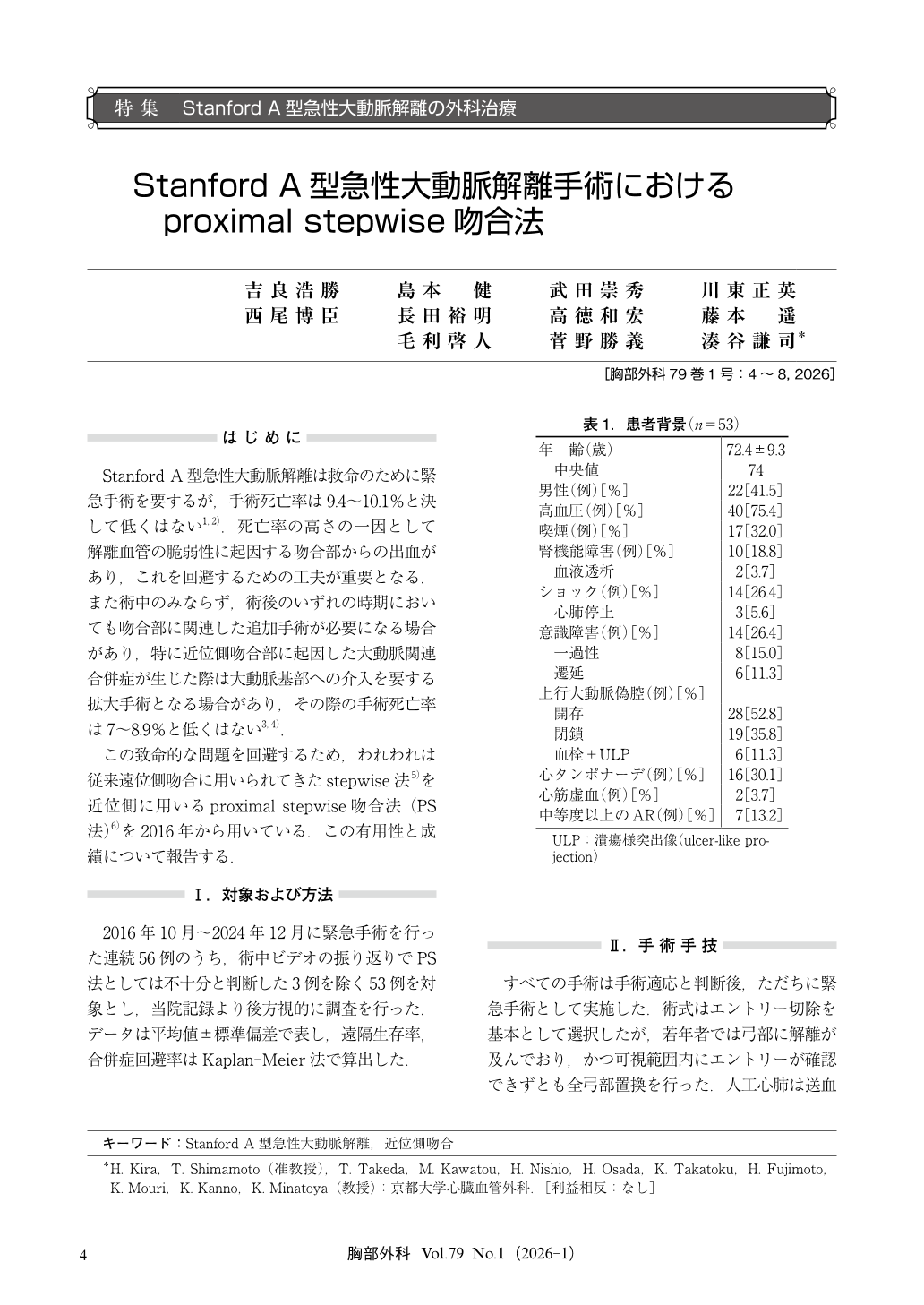
Stanford A型急性大動脈解離は救命のために緊急手術を要するが,手術死亡率は9.4~10.1%と決して低くはない1,2).死亡率の高さの一因として解離血管の脆弱性に起因する吻合部からの出血があり,これを回避するための工夫が重要となる.また術中のみならず,術後のいずれの時期においても吻合部に関連した追加手術が必要になる場合があり,特に近位側吻合部に起因した大動脈関連合併症が生じた際は大動脈基部への介入を要する拡大手術となる場合があり,その際の手術死亡率は7~8.9%と低くはない3,4).
Bleeding from the proximal anastomosis site during Stanford type A acute aortic dissection (AAAD) surgery can be a fatal problem. To avoid this, we use the proximal stepwise (PS) method for proximal anastomosis at our institution, and we examined its usefulness and results. We retrospectively analyzed 53 emergency surgeries (22 males, mean age 72.4±9.3 years) performed between October 2016 and December 2024. There were 39 ascending replacements and 12 total ascending replacements. There were no cases of difficult hemostasis during proximal anastomosis. The in-hospital mortality rate was 3.7% (2 cases). During the observation period of 1,245.7±924.6 days, there were no aortic events or aortic-related deaths related to the proximal anastomosis, and the 3-year survival rate was 93.4%. The PS method is useful as a proximal anastomosis technique in AAAD surgery and may contribute to a favorable long-term prognosis by avoiding late complications.
© Nankodo Co., Ltd., 2026