Japanese
English
- 有料閲覧
- Abstract 文献概要
- 1ページ目 Look Inside
- 参考文献 Reference
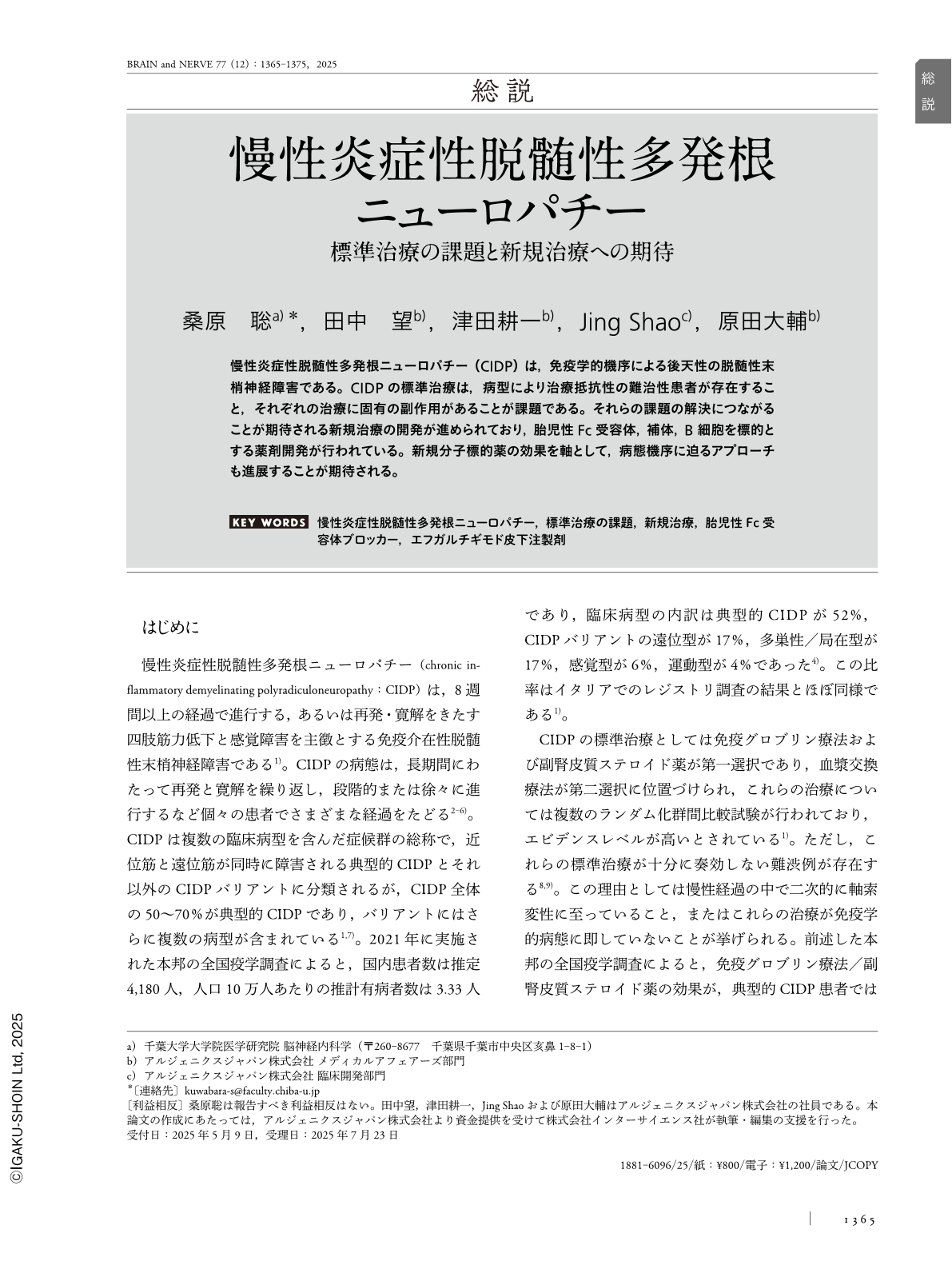
慢性炎症性脱髄性多発根ニューロパチー(CIDP)は,免疫学的機序による後天性の脱髄性末梢神経障害である。CIDPの標準治療は,病型により治療抵抗性の難治性患者が存在すること,それぞれの治療に固有の副作用があることが課題である。それらの課題の解決につながることが期待される新規治療の開発が進められており,胎児性Fc受容体,補体,B細胞を標的とする薬剤開発が行われている。新規分子標的薬の効果を軸として,病態機序に迫るアプローチも進展することが期待される。
Abstract
Chronic inflammatory demyelinating polyradiculoneuropathy (CIDP) is an immune-mediated neuropathy and patients suffer from muscle weakness and impaired quality of life. Current standard treatments for CIDP include immunoglobulin, corticosteroid, and plasma exchange. Efficacy of these treatments has been demonstrated by high level evidence from several randomized controlled trials. Otherwise, there are some concerns about these treatments such as side effects, CIDP recurrence, unstable drug supply, difficulty of use, and the presence of refractory patients. Novel therapies for CIDP are under development, among which an approach to reduce pathogenic IgG, which is thought to be involved in the pathogenesis of CIDP. Efgartigimod is a human IgG1 antibody fragment designed to reduce IgG including pathogenic IgG by binding to the neonatal Fc receptor and blocking the IgG recycling process. The efficacy and safety of subcutaneous efgartigimod were evaluated in the ADHERE trial, a multicenter, randomized-withdrawal, double-blind, placebo-controlled phase II trial in patients with CIDP, in which subcutaneous efgartigimod significantly suppressed the recurrence of CIDP compared to the placebo and was well-tolerated. Based on these results, subcutaneous efgartigimod was approved for the treatment of CIDP in December 2024 in Japan. Other new therapies targeting complement pathways or B cells are under clinical development.
(Received May 9, 2025; Accepted July 23, 2025; Published December 1, 2025)
Copyright © 2025, Igaku-Shoin Ltd. All rights reserved.