Japanese
English
- 有料閲覧
- Abstract 文献概要
- 1ページ目 Look Inside
- 参考文献 Reference
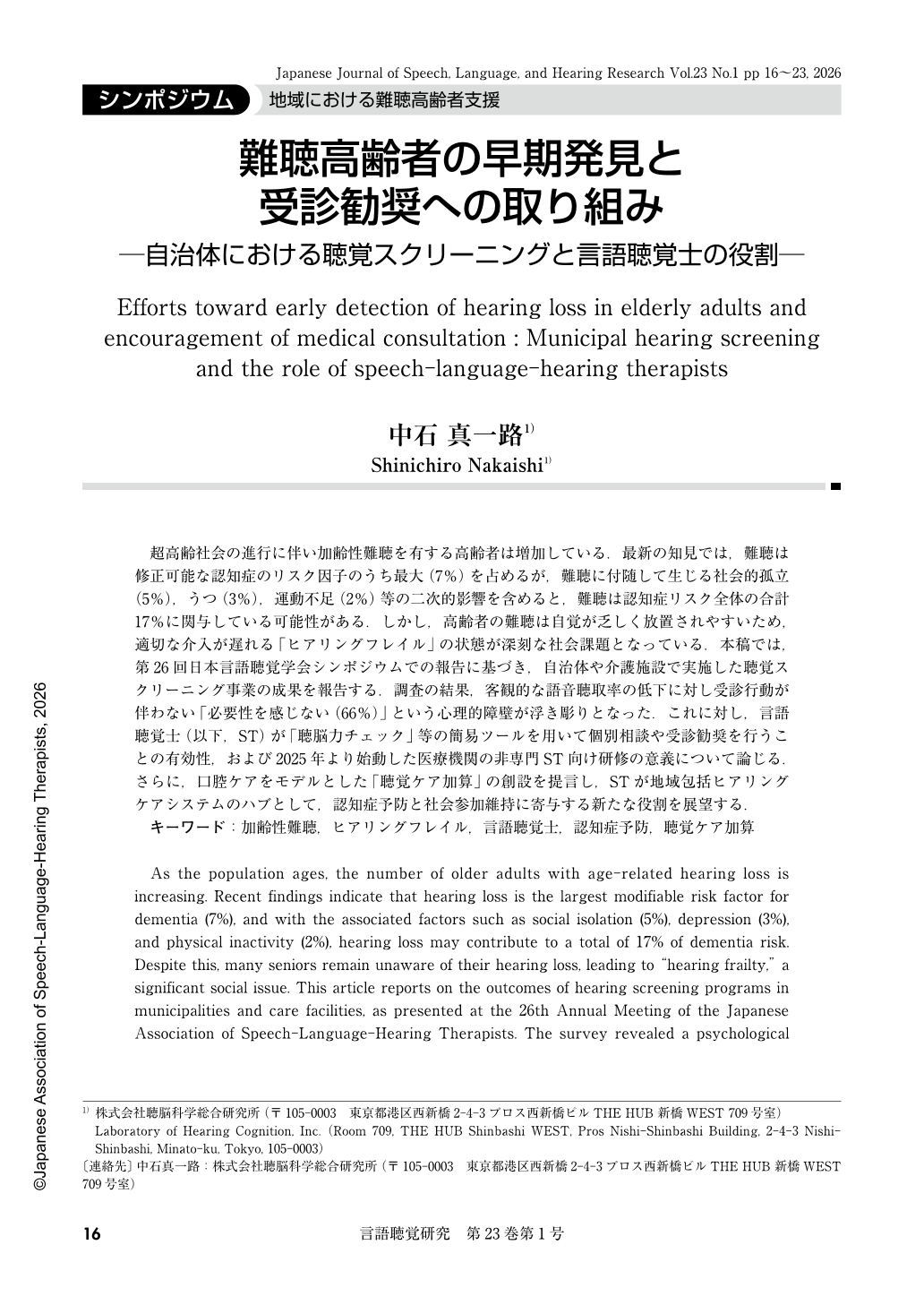
超高齢社会の進行に伴い加齢性難聴を有する高齢者は増加している.最新の知見では,難聴は修正可能な認知症のリスク因子のうち最大(7%)を占めるが,難聴に付随して生じる社会的孤立(5%),うつ(3%),運動不足(2%)等の二次的影響を含めると,難聴は認知症リスク全体の合計17%に関与している可能性がある.しかし,高齢者の難聴は自覚が乏しく放置されやすいため,適切な介入が遅れる「ヒアリングフレイル」の状態が深刻な社会課題となっている.本稿では,第26回日本言語聴覚学会シンポジウムでの報告に基づき,自治体や介護施設で実施した聴覚スクリーニング事業の成果を報告する.調査の結果,客観的な語音聴取率の低下に対し受診行動が伴わない「必要性を感じない(66%)」という心理的障壁が浮き彫りとなった.これに対し,言語聴覚士(以下,ST)が「聴脳力チェック」等の簡易ツールを用いて個別相談や受診勧奨を行うことの有効性,および2025年より始動した医療機関の非専門ST向け研修の意義について論じる.さらに,口腔ケアをモデルとした「聴覚ケア加算」の創設を提言し,STが地域包括ヒアリングケアシステムのハブとして,認知症予防と社会参加維持に寄与する新たな役割を展望する.
As the population ages, the number of older adults with age-related hearing loss is increasing. Recent findings indicate that hearing loss is the largest modifiable risk factor for dementia (7%), and with the associated factors such as social isolation (5%), depression (3%), and physical inactivity (2%), hearing loss may contribute to a total of 17% of dementia risk. Despite this, many seniors remain unaware of their hearing loss, leading to “hearing frailty,” a significant social issue. This article reports on the outcomes of hearing screening programs in municipalities and care facilities, as presented at the 26th Annual Meeting of the Japanese Association of Speech-Language-Hearing Therapists. The survey revealed a psychological barrier to seeking medical attention for low word recognition scores, with 66% of those recommended to seek medical consultation considered it “unnecessary.” We discuss the effectiveness of individual consultations and medical referrals by speech-language-hearing therapists (SLHTs) using tools like the “Hearing Cognition Check,” as well as the significance of training programs for non-audiology-focused SLHTs launched in 2025. Furthermore, we propose the establishment of a “Hearing Care Addition,” modeled after oral care incentives, envisioning a new role for SLHTs as hubs in community-based comprehensive hearing care systems to prevent dementia and maintain social participation of elderly people.
Copyright © 2026, Japanese Association of Speech-Language-Hearing Therapists. All rights reserved.