Japanese
English
- 有料閲覧
PPV購入案内
1,320円 (1,200円+税10%) こちらは、488ページから496ページの文献です。購入には医書.jp本会員登録が必要です。
会員登録完了後に改めて上記「購入サイトへ」を選択してください。
または「購入サイトへ」選択後に「購入ログイン」、「新規会員登録」の順に進んでください。
会員登録について詳しくはをご確認ください。
- Abstract 文献概要
- 1ページ目 Look Inside
- 参考文献 Reference
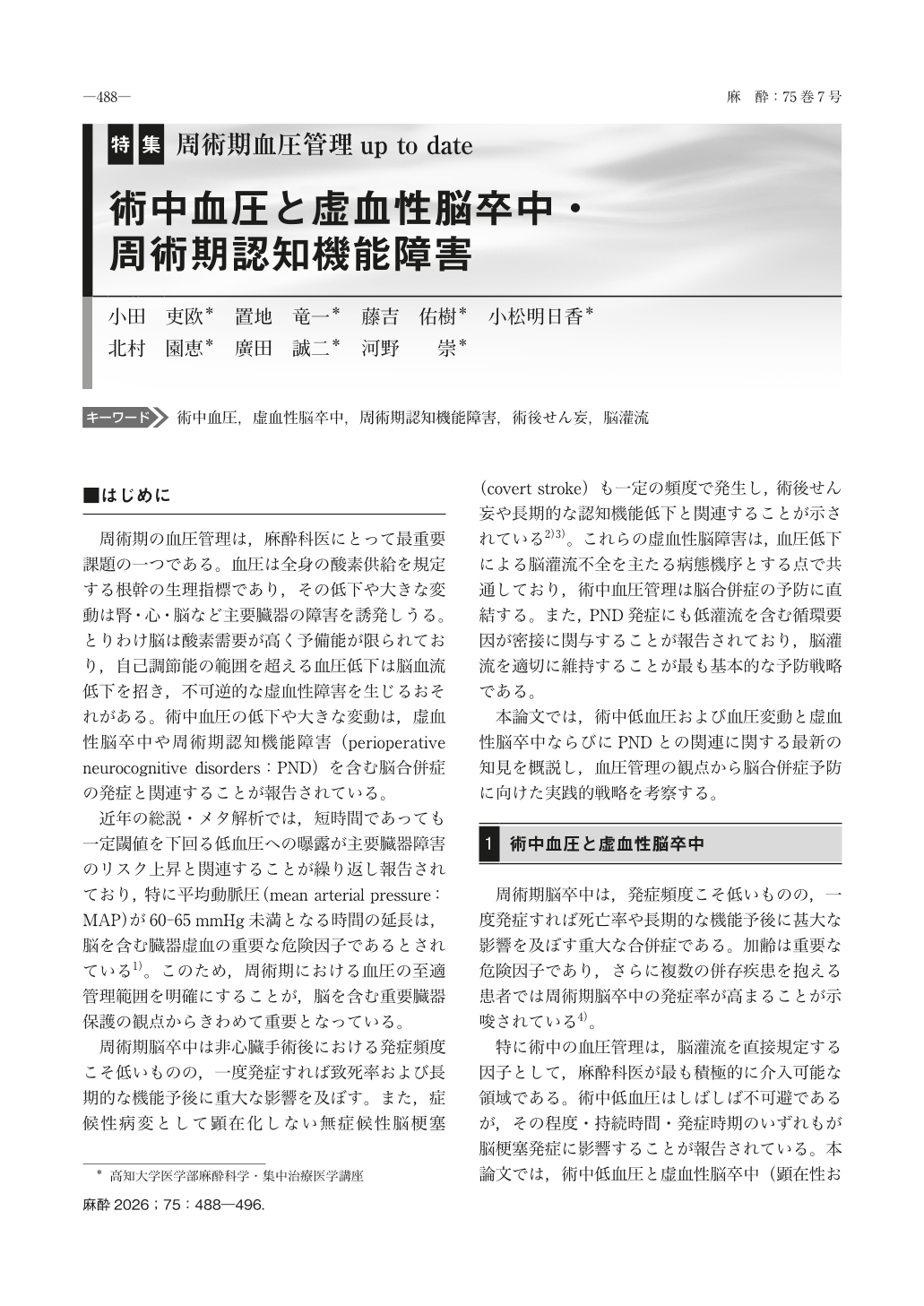
はじめに
周術期の血圧管理は,麻酔科医にとって最重要課題の一つである。血圧は全身の酸素供給を規定する根幹の生理指標であり,その低下や大きな変動は腎・心・脳など主要臓器の障害を誘発しうる。とりわけ脳は酸素需要が高く予備能が限られており,自己調節能の範囲を超える血圧低下は脳血流低下を招き,不可逆的な虚血性障害を生じるおそれがある。術中血圧の低下や大きな変動は,虚血性脳卒中や周術期認知機能障害(perioperative neurocognitive disorders:PND)を含む脳合併症の発症と関連することが報告されている。
近年の総説・メタ解析では,短時間であっても一定閾値を下回る低血圧への曝露が主要臓器障害のリスク上昇と関連することが繰り返し報告されており,特に平均動脈圧(mean arterial pressure:MAP)が60-65mmHg未満となる時間の延長は,脳を含む臓器虚血の重要な危険因子であるとされている1)。このため,周術期における血圧の至適管理範囲を明確にすることが,脳を含む重要臓器保護の観点からきわめて重要となっている。
周術期脳卒中は非心臓手術後における発症頻度こそ低いものの,一度発症すれば致死率および長期的な機能予後に重大な影響を及ぼす。また,症候性病変として顕在化しない無症候性脳梗塞(covert stroke)も一定の頻度で発生し,術後せん妄や長期的な認知機能低下と関連することが示されている2)3)。これらの虚血性脳障害は,血圧低下による脳灌流不全を主たる病態機序とする点で共通しており,術中血圧管理は脳合併症の予防に直結する。また,PND発症にも低灌流を含む循環要因が密接に関与することが報告されており,脳灌流を適切に維持することが最も基本的な予防戦略である。
本論文では,術中低血圧および血圧変動と虚血性脳卒中ならびにPNDとの関連に関する最新の知見を概説し,血圧管理の観点から脳合併症予防に向けた実践的戦略を考察する。
Intraoperative blood pressure(BP)management is one of the most critical responsibilities of anesthesiologists, as BP directly determines systemic oxygen delivery and cerebral perfusion. The brain, with its high metabolic demand and limited autoregulatory reserve, is particularly vulnerable to reductions in perfusion pressure. Intraoperative hypotension, even when transient, has been linked to ischemic stroke and perioperative neurocognitive disorders(PND), including postoperative delirium and delayed cognitive recovery. Observational studies and meta-analyses indicate that exposure to a mean arterial pressure(MAP)value below 60-65mmHg, as well as excessive BP variability, increases neurological risks. Importantly, not only overt stroke but also covert stroke and subtle cognitive decline are increasingly recognized as clinically relevant. The underlying mechanisms are multifactorial, involving hypoperfusion, embolism, systemic inflammation, neuroinflammation, anesthetic depth, and postoperative factors such as pain and sleep disturbance. Preventive strategies should not rely solely on BP optimization;rather, they should be integrated into multimodal perioperative care. These strategies include individualized BP targets, invasive and noninvasive cerebral monitoring, early rehabilitation, and multidisciplinary interventions such as structured delirium-prevention programs. A comprehensive approach that stabilizes BP, preserves cerebral perfusion, and addresses systemic contributors is essential to protect brain function and improve long-term cognitive outcomes in surgical patients.
Copyright © 2026 KOKUSEIDO CO., LTD. All Rights Reserved.