Japanese
English
- 有料閲覧
PPV購入案内
1,320円 (1,200円+税10%) こちらは、560ページから569ページの文献です。購入には医書.jp本会員登録が必要です。
会員登録完了後に改めて上記「購入サイトへ」を選択してください。
または「購入サイトへ」選択後に「購入ログイン」、「新規会員登録」の順に進んでください。
会員登録について詳しくはをご確認ください。
- Abstract 文献概要
- 1ページ目 Look Inside
- 参考文献 Reference
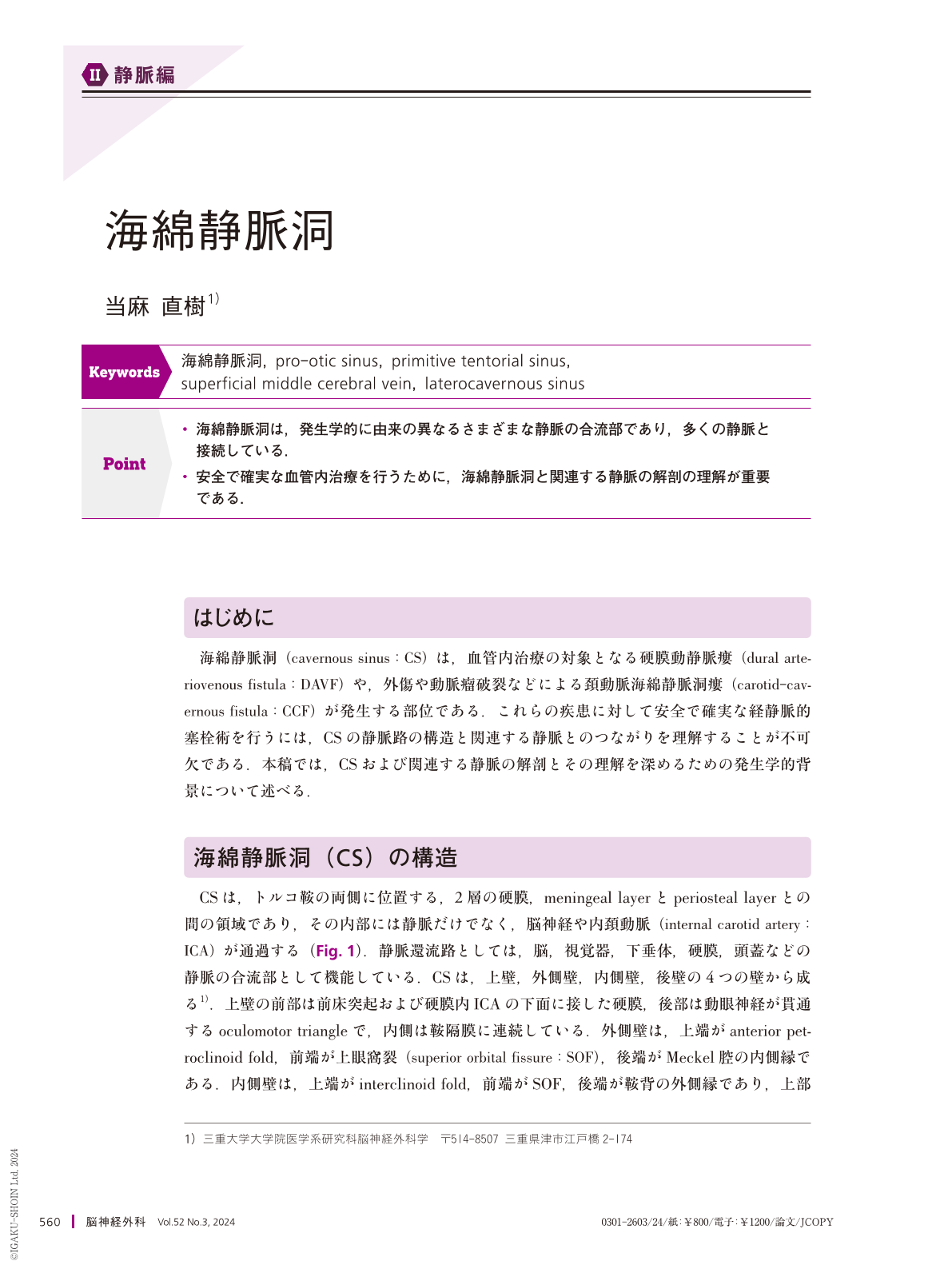
Point
・海綿静脈洞は,発生学的に由来の異なるさまざまな静脈の合流部であり,多くの静脈と接続している.
・安全で確実な血管内治療を行うために,海綿静脈洞と関連する静脈の解剖の理解が重要である.
The cavernous sinus is the crossroad of veins from various embryological origins, including the brain, eye, pituitary gland, dura, and cranium. Embryologically, the cavernous sinus is mainly formed from the pro-otic sinus; secondary anastomosis between the cavernous sinus and primitive tentorial sinus results in various anatomical variations in the drainage patterns of the superficial middle cerebral vein. Moreover, connections between the cavernous sinus and basal vein via the uncal vein, bridging vein, and petrosal vein from the superior petrosal sinus may exist. Retrograde drainage from the cavernous sinus into the cerebral veins is often observed in arteriovenous shunts involving the cavernous sinus, such as dural and carotid-cavernous fistulas, which are primarily treated using transvenous embolization. Understanding the anatomy of the cavernous sinus and its associated veins is essential for safe and reliable endovascular treatment.
Copyright © 2024, Igaku-Shoin Ltd. All rights reserved.