Japanese
English
- 有料閲覧
PPV購入案内
1,320円 (1,200円+税10%) こちらは、1150ページから1157ページの文献です。購入には医書.jp本会員登録が必要です。
会員登録完了後に改めて上記「購入サイトへ」を選択してください。
または「購入サイトへ」選択後に「購入ログイン」、「新規会員登録」の順に進んでください。
会員登録について詳しくはをご確認ください。
- Abstract 文献概要
- 1ページ目 Look Inside
- 参考文献 Reference
Point
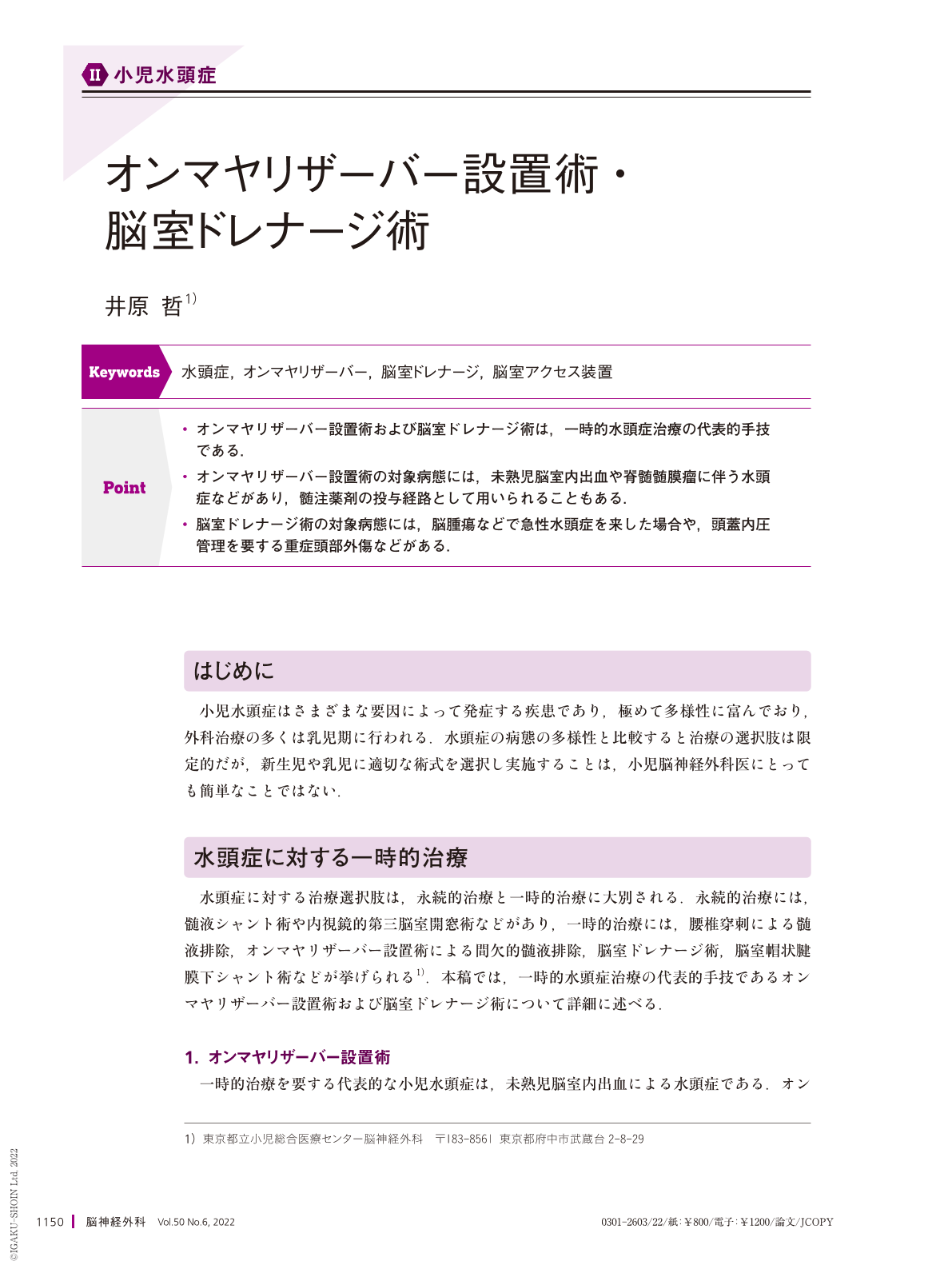
・オンマヤリザーバー設置術および脳室ドレナージ術は,一時的水頭症治療の代表的手技である.
・オンマヤリザーバー設置術の対象病態には,未熟児脳室内出血や脊髄髄膜瘤に伴う水頭症などがあり,髄注薬剤の投与経路として用いられることもある.
・脳室ドレナージ術の対象病態には,脳腫瘍などで急性水頭症を来した場合や,頭蓋内圧管理を要する重症頭部外傷などがある.
Childhood hydrocephalus is a highly diverse disease caused by various factors, and most surgical treatments are performed during infancy. Despite the diversity of hydrocephalus pathologies, treatment options are limited. It is difficult for pediatric neurosurgeons to select and perform appropriate surgical procedures for neonates and infants.
Treatment options for hydrocephalus are broadly divided into permanent and temporary. Permanent treatments include cerebrospinal fluid shunt and endoscopic third ventriculostomy; temporary treatment entails cerebrospinal fluid drainage using lumbar puncture and intermittent cerebrospinal fluid drainage with an Ommaya reservoir, ventricular drainage, and ventriculosubgaleal shunt. This article describes in detail Ommaya reservoir placement and ventricular drainage as representative procedures for temporarily treating hydrocephalus.
Copyright © 2022, Igaku-Shoin Ltd. All rights reserved.