Japanese
English
- 有料閲覧
PPV購入案内
1,320円 (1,200円+税10%) こちらは、819ページから825ページの文献です。購入には医書.jp本会員登録が必要です。
会員登録完了後に改めて上記「購入サイトへ」を選択してください。
または「購入サイトへ」選択後に「購入ログイン」、「新規会員登録」の順に進んでください。
会員登録について詳しくはをご確認ください。
- Abstract 文献概要
- 1ページ目 Look Inside
- 参考文献 Reference
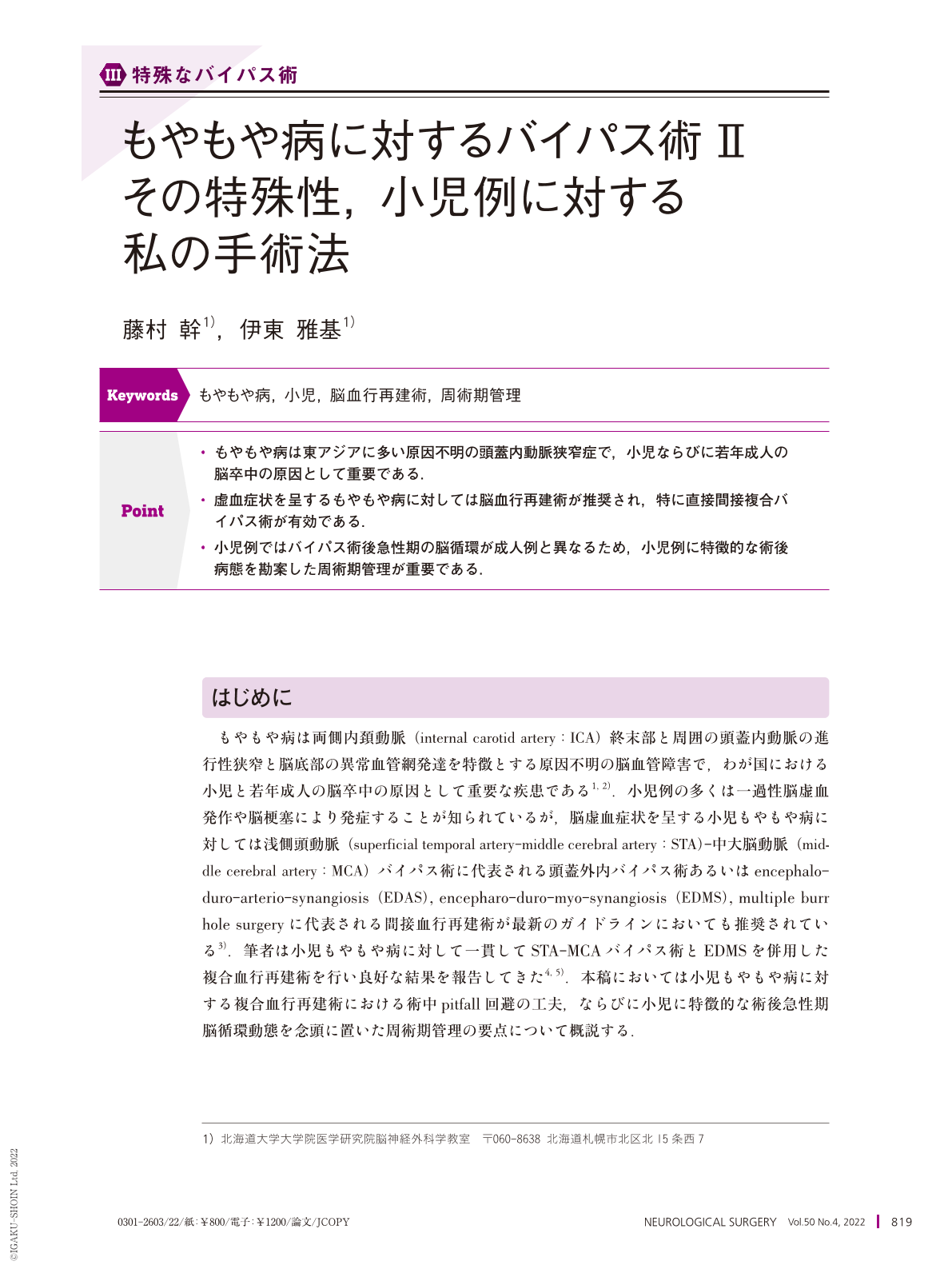
Point
・もやもや病は東アジアに多い原因不明の頭蓋内動脈狭窄症で,小児ならびに若年成人の脳卒中の原因として重要である.
・虚血症状を呈するもやもや病に対しては脳血行再建術が推奨され,特に直接間接複合バイパス術が有効である.
・小児例ではバイパス術後急性期の脳循環が成人例と異なるため,小児例に特徴的な術後病態を勘案した周術期管理が重要である.
Moyamoya disease(MMD)is a chronic, occlusive cerebrovascular disease with unknown etiology, characterized by progressive stenosis of the internal carotid artery terminus and abnormal vascular network formation at the base of the brain. MMD has bimodal age distribution, with peaks in children and young adults, and surgical revascularization is a reasonable management choice for pediatric and adult patients with ischemic MMD. The superficial temporal artery-middle cerebral artery anastomosis with indirect pial synangiosis(combined revascularization)is a preferred surgical procedure for adult and pediatric MMD patients, providing early cerebral hemodynamic improvement and long-term favorable outcomes. Pediatric patients with MMD can present intrinsic postoperative hemodynamic complications, such as watershed shift ischemia and transient global hypoperfusion, even after successful revascularization. Therefore, perioperative management based on the early hemodynamic study is critical to avoid surgical complications, including perioperative cerebral infarction.
Copyright © 2022, Igaku-Shoin Ltd. All rights reserved.