Japanese
English
- 有料閲覧
PPV購入案内
1,320円 (1,200円+税10%) こちらは、145ページから150ページの文献です。購入には医書.jp本会員登録が必要です。
会員登録完了後に改めて上記「購入サイトへ」を選択してください。
または「購入サイトへ」選択後に「購入ログイン」、「新規会員登録」の順に進んでください。
会員登録について詳しくはをご確認ください。
- Abstract 文献概要
- 1ページ目 Look Inside
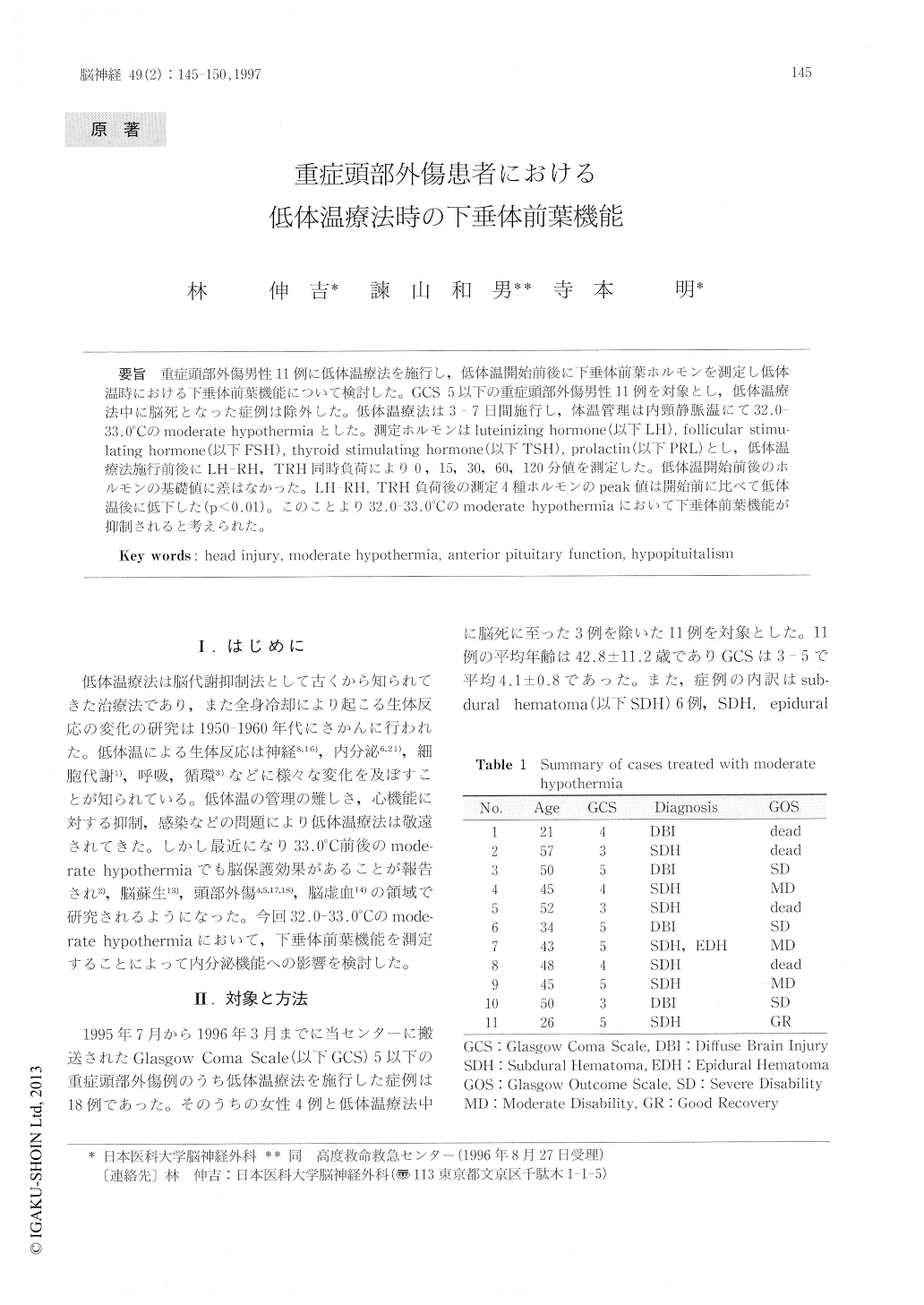
重症頭部外傷男性11例に低体温療法を施行し,低体温開始前後に下垂体前葉ホルモンを測定し低体温時における下垂体前葉機能について検討した。GCS5以下の重症頭部外傷男性11例を対象とし,低体温療法中に脳死となった症例は除外した。低体温療法は3-7日間施行し,体温管理は内頸静脈温にて32.0—33.0℃のmoderate hypothermiaとした。測定ホルモンはluteinizing hormone(以下LH),follicular stimu—lating hormone(以下FSH),thyroid stimulating hormone(以下TSH),prolactin(以下PRL)とし,低体温療法施行前後にLH-RH,TRH同時負荷により0,15,30,60,120分値を測定した。低体温開始前後のホルモンの基礎値に差はなかった。LH-RH,TRH負荷後の測定4種ホルモンのpeak値は開始前に比べて低体温後に低下した(p<0.01)。このことより32.0-33.0℃のmoderate hypothermiaにおいて下垂体前葉機能が抑制されると考えられた。
Eleven patients with severe head injuries were treated by artificial moderate hypothermia (32.0- 33.0℃). Mesurement of the serum levels of anterior pituitary hormones (LH, FSH, TSH, and PRL) and the response of these hormones to the respective releasing hormones was done in the 11 patients before and during hypothermia. All 11 patients were under GCS 5. Those with brain death during hypothermia were excluded.
Moderate hypothermia was performed for 3-7 days and involved cooling to 32.0-33.0℃ (Jugular venous blood temperature).
Copyright © 1997, Igaku-Shoin Ltd. All rights reserved.