Japanese
English
- 有料閲覧
PPV購入案内
1,320円 (1,200円+税10%) こちらは、753ページから757ページの文献です。購入には医書.jp本会員登録が必要です。
会員登録完了後に改めて上記「購入サイトへ」を選択してください。
または「購入サイトへ」選択後に「購入ログイン」、「新規会員登録」の順に進んでください。
会員登録について詳しくはをご確認ください。
- Abstract 文献概要
- 1ページ目 Look Inside
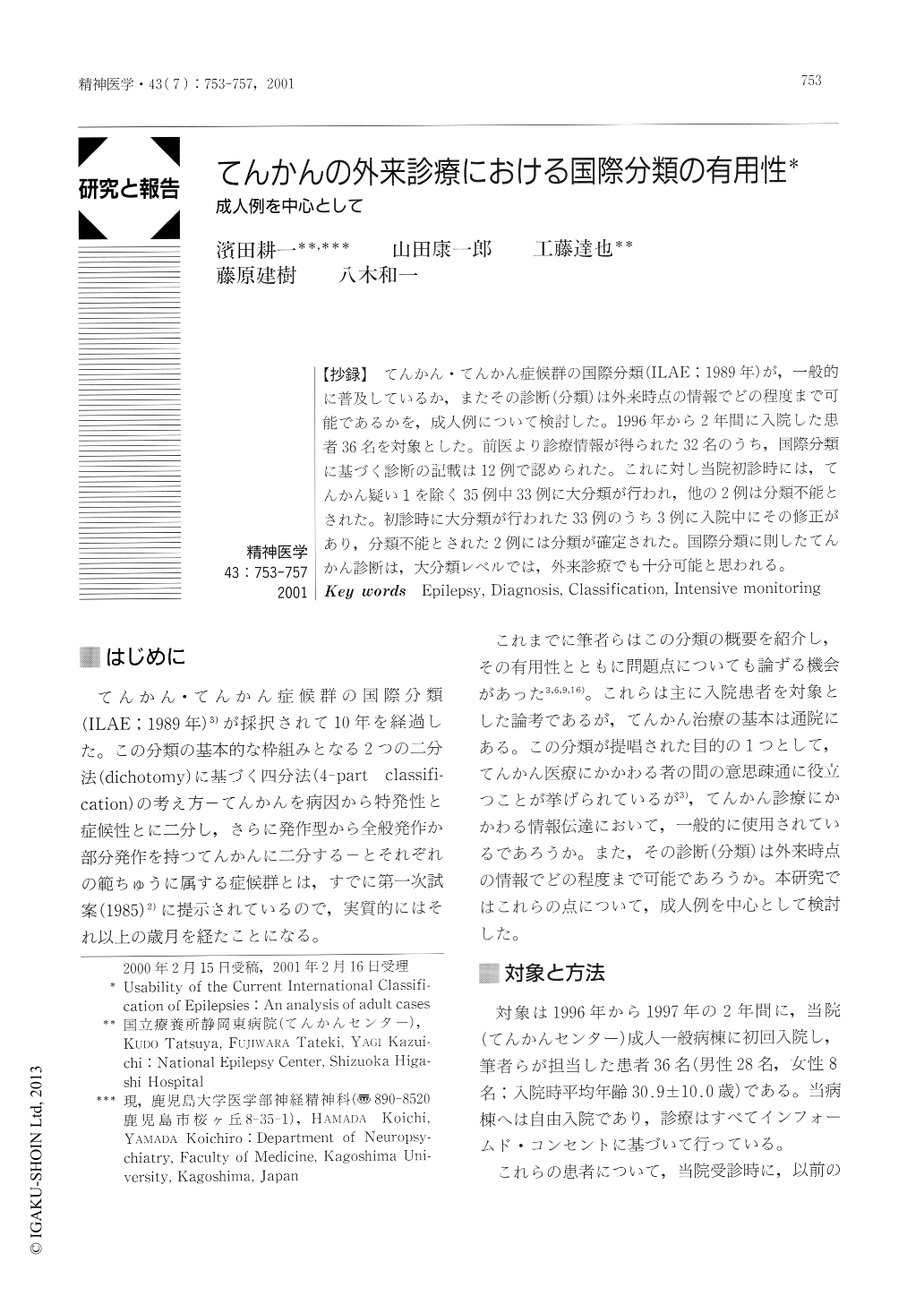
【抄録】 てんかん・てんかん症候群の国際分類(ILAE;1989年)が,一般的に普及しているか,またその診断(分類)は外来時点の情報でどの程度まで可能であるかを,成人例について検討した。1996年から2年間に入院した患者36名を対象とした。前医より診療情報が得られた32名のうち,国際分類に基づく診断の記載は12例で認められた。これに対し当院初診時には,てんかん疑い1を除く35例中33例に大分類が行われ,他の2例は分類不能とされた。初診時に大分類が行われた33例のうち3例に入院中にその修正があり,分類不能とされた2例には分類が確定された。国際分類に則したてんかん診断は,大分類レベルでは,外来診療でも十分可能と思われる。
Ten years have passed since the International Classification of Epilepsies and Epileptic Syndromes (ILAE ; 1989) was adopted. We studied whether or not this classification is generally used in daily practice of adult epileptics, and whether it is effectively applicable based on the information available at the outpatient clinic. Subjects consisted of 36 patients (30.9±10.0 years old at the time of the hospitalization) who were admitted to our adult general ward from 1996 to 1997. The relevant information about epilepsy diagnosis was extracted from the previous doctor's documents, and modifications of epilepsy diagnosis after hospitalization were also analyzed.
All the patients had histories of previous medication, and information concerning introduction was available in 32 patients (89%). The descriptions based on the 2 dichotomies in the current epilepsy classification were found in 6 cases, syndrome classifications in 6, and epilepsy suspected in 1. On the other hand, major classification was made in 33 of 35 epileptic patients at the time of our first examination, and syndrome classifications were made in 14 cases. The rest, 2 patients, remained unclassifiable. During the course of hospitalization, major classifications were modified for 3 patients, and epilepsy classifications were recognized for the 2 unclassified cases. The diagnosis of epilepsies based on the international classification seems to be possible, at least at the major classification level, even when it is based on the limited information available at the outpatient clinic. We expect that the international classification of epilepsies will continue to be used widely.
Copyright © 2001, Igaku-Shoin Ltd. All rights reserved.