Japanese
English
- 有料閲覧
- Abstract 文献概要
- 1ページ目 Look Inside
- 参考文献 Reference
Point
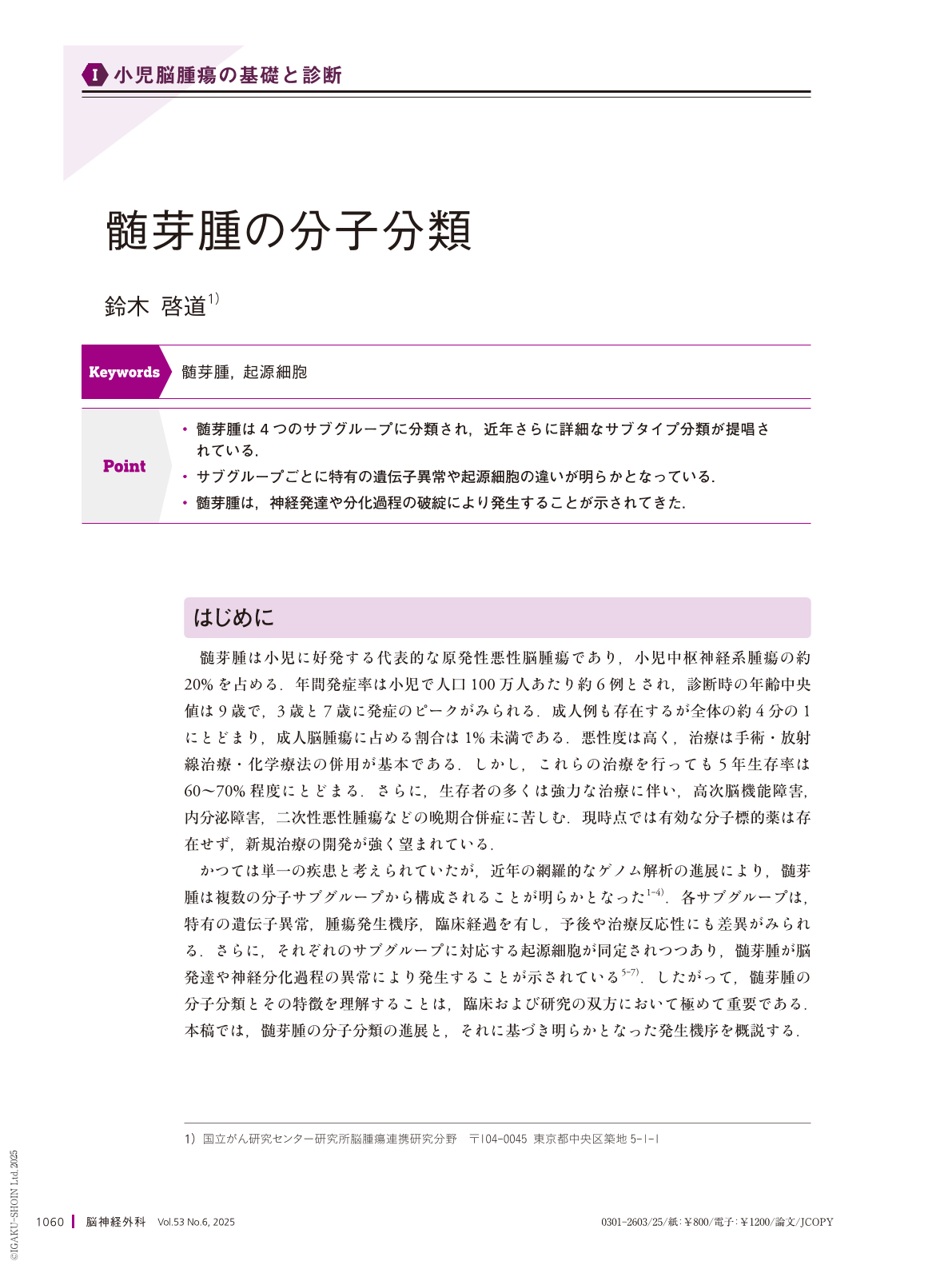
・髄芽腫は4つのサブグループに分類され,近年さらに詳細なサブタイプ分類が提唱されている.
・サブグループごとに特有の遺伝子異常や起源細胞の違いが明らかとなっている.
・髄芽腫は,神経発達や分化過程の破綻により発生することが示されてきた.
Medulloblastoma is the most common malignant brain tumor in children. Advances in sequencing technologies have allowed the identification of four major molecular subgroups, each defined by distinct genetic alterations, biological features, and clinical courses. Recent studies have shown that medulloblastomas arise following disruptions in normal neurodevelopment, in which genetic abnormalities impair differentiation and lead to the persistence and malignant transformation of normally eliminated progenitor cells. Subgroup-specific cell of origin have since been identified. In Group 3 and Group 4, which were previously poorly understood, genetic alterations were shown to impair neuronal differentiation, revealing their pathogenesis. In SHH medulloblastomas, mutations in genes associated with RNA biology, including ELP1 and U1 snRNA, highlight alternative mechanisms of tumor development. Each subgroup can be further divided into subtypes that enable finer distinctions between clinical outcomes, support treatment intensification in high-risk patients, and de-escalation strategies in favorable groups. Although medulloblastoma is one of the best-studied pediatric brain tumors, its complexity continues to present challenges, and a deeper understanding of its molecular heterogeneity is essential to advance risk-adapted and targeted therapies.
Copyright © 2025, Igaku-Shoin Ltd. All rights reserved.