Japanese
English
- 有料閲覧
PPV購入案内
1,320円 (1,200円+税10%) こちらは、497ページから501ページの文献です。購入には医書.jp本会員登録が必要です。
会員登録完了後に改めて上記「購入サイトへ」を選択してください。
または「購入サイトへ」選択後に「購入ログイン」、「新規会員登録」の順に進んでください。
会員登録について詳しくはをご確認ください。
- Abstract 文献概要
- 1ページ目 Look Inside
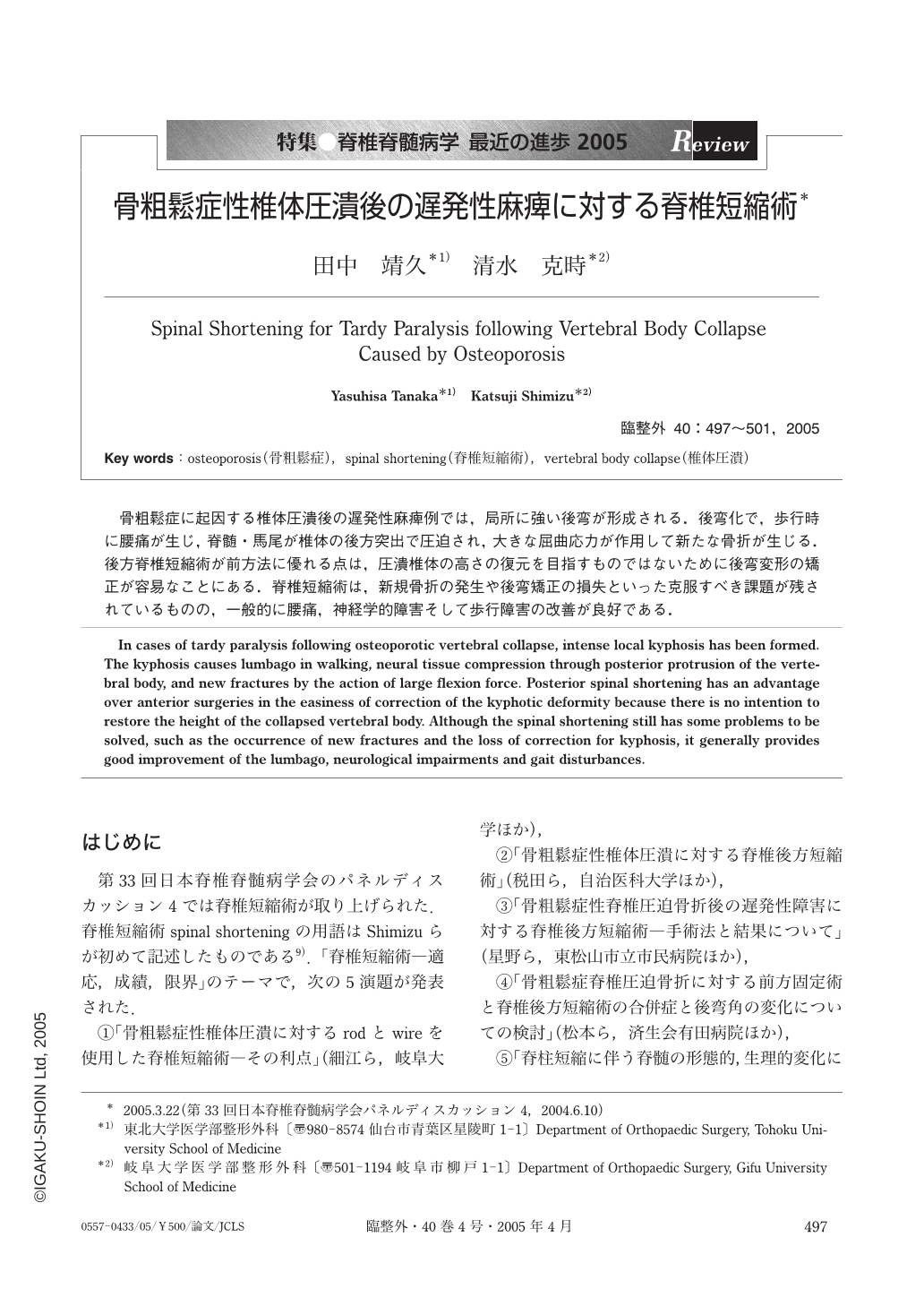
骨粗鬆症に起因する椎体圧潰後の遅発性麻痺例では,局所に強い後弯が形成される.後弯化で,歩行時に腰痛が生じ,脊髄・馬尾が椎体の後方突出で圧迫され,大きな屈曲応力が作用して新たな骨折が生じる.後方脊椎短縮術が前方法に優れる点は,圧潰椎体の高さの復元を目指すものではないために後弯変形の矯正が容易なことにある.脊椎短縮術は,新規骨折の発生や後弯矯正の損失といった克服すべき課題が残されているものの,一般的に腰痛,神経学的障害そして歩行障害の改善が良好である.
In cases of tardy paralysis following osteoporotic vertebral collapse, intense local kyphosis has been formed. The kyphosis causes lumbago in walking, neural tissue compression through posterior protrusion of the vertebral body, and new fractures by the action of large flexion force. Posterior spinal shortening has an advantage over anterior surgeries in the easiness of correction of the kyphotic deformity because there is no intention to restore the height of the collapsed vertebral body. Although the spinal shortening still has some problems to be solved, such as the occurrence of new fractures and the loss of correction for kyphosis, it generally provides good improvement of the lumbago, neurological impairments and gait disturbances.
Copyright © 2005, Igaku-Shoin Ltd. All rights reserved.