Japanese
English
- 販売していません
PPV購入案内
都合により販売していません- Abstract 文献概要
- 1ページ目 Look Inside
- 参考文献 Reference
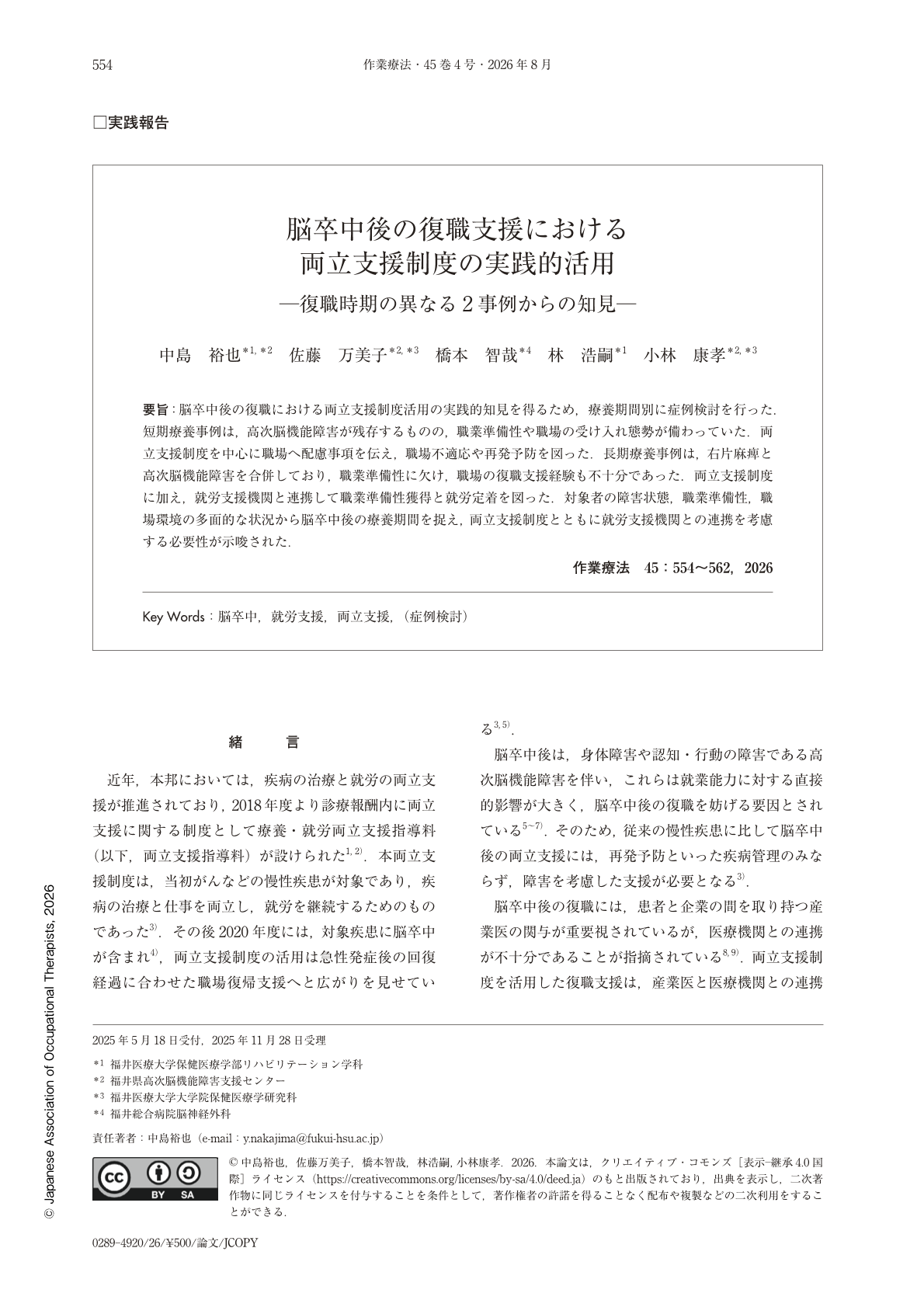
要旨:脳卒中後の復職における両立支援制度活用の実践的知見を得るため,療養期間別に症例検討を行った.短期療養事例は,高次脳機能障害が残存するものの,職業準備性や職場の受け入れ態勢が備わっていた.両立支援制度を中心に職場へ配慮事項を伝え,職場不適応や再発予防を図った.長期療養事例は,右片麻痺と高次脳機能障害を合併しており,職業準備性に欠け,職場の復職支援経験も不十分であった.両立支援制度に加え,就労支援機関と連携して職業準備性獲得と就労定着を図った.対象者の障害状態,職業準備性,職場環境の多面的な状況から脳卒中後の療養期間を捉え,両立支援制度とともに就労支援機関との連携を考慮する必要性が示唆された.
To gain practical insights into supporting balanced treatment and work in post-stroke return-to-work, we conducted case studies organized by recuperation period. In a short-term recuperation case, although higher brain dysfunction was present, both vocational readiness and workplace preparedness were sufficient. We supported balanced treatment and work to communicate case-specific considerations to the workplace, aiming to prevent poor workplace adjustment and stroke recurrence. The long-term recuperation case involved right-sided hemiplegia combined with higher brain dysfunction and lacked vocational readiness. In addition, the workplace had limited experience in supporting return-to-work. In this case, in addition to using support for balancing treatment and work, we collaborated with employment support agencies to enhance vocational readiness and promote workplace retention after the patient's return to work. These findings suggest that the duration of recuperation should be understood in light of the multifaceted circumstances of the individual's disability status, vocational readiness, and workplace environment. On that basis, it is necessary to consider collaboration with employment support agencies alongside the use of support for balancing treatment and work.
Copyright © 2026, Japanese Association of Occupational Therapists. All rights reserved.