Japanese
English
- 有料閲覧
PPV購入案内
1,320円 (1,200円+税10%) こちらは、401ページから405ページの文献です。購入には医書.jp本会員登録が必要です。
会員登録完了後に改めて上記「購入サイトへ」を選択してください。
または「購入サイトへ」選択後に「購入ログイン」、「新規会員登録」の順に進んでください。
会員登録について詳しくはをご確認ください。
- Abstract 文献概要
- 1ページ目 Look Inside
- 参考文献 Reference
- サイト内被引用 Cited by
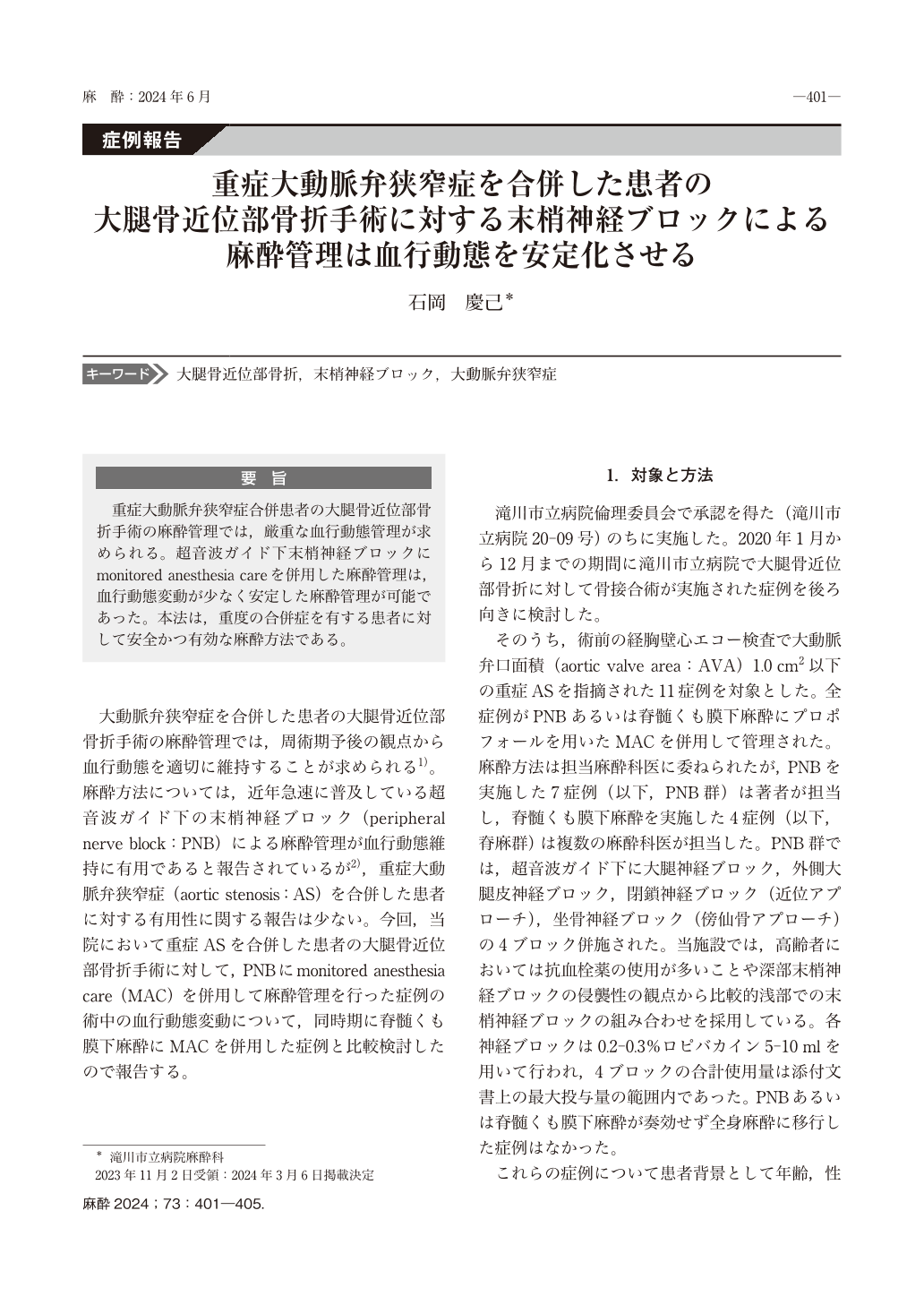
要旨
重症大動脈弁狭窄症合併患者の大腿骨近位部骨折手術の麻酔管理では,厳重な血行動態管理が求められる。超音波ガイド下末梢神経ブロックにmonitored anesthesia careを併用した麻酔管理は,血行動態変動が少なく安定した麻酔管理が可能であった。本法は,重度の合併症を有する患者に対して安全かつ有効な麻酔方法である。
Strict hemodynamic management is required for hip fracture surgery in patients with severe aortic stenosis(AS). Since severe AS is one of the most challenging comorbidities in attempts to maintain patients’ hemodynamic status, the impact of anesthetic techniques on patients’ hemodynamic status may vary. We investigated hemodynamic changes during the hip fracture surgeries of patients with severe AS for whom ultrasound-guided peripheral nerve block(PNB;n=7)or spinal anesthesia(SA;n=4)was used. Our analyses revealed that less hemodynamic change occurred in the PNB group compared to the SA group. We conclude that for patients with severe AS, PNB provides better hemodynamic stability than SA.
Copyright © 2024 KOKUSEIDO CO., LTD. All Rights Reserved.